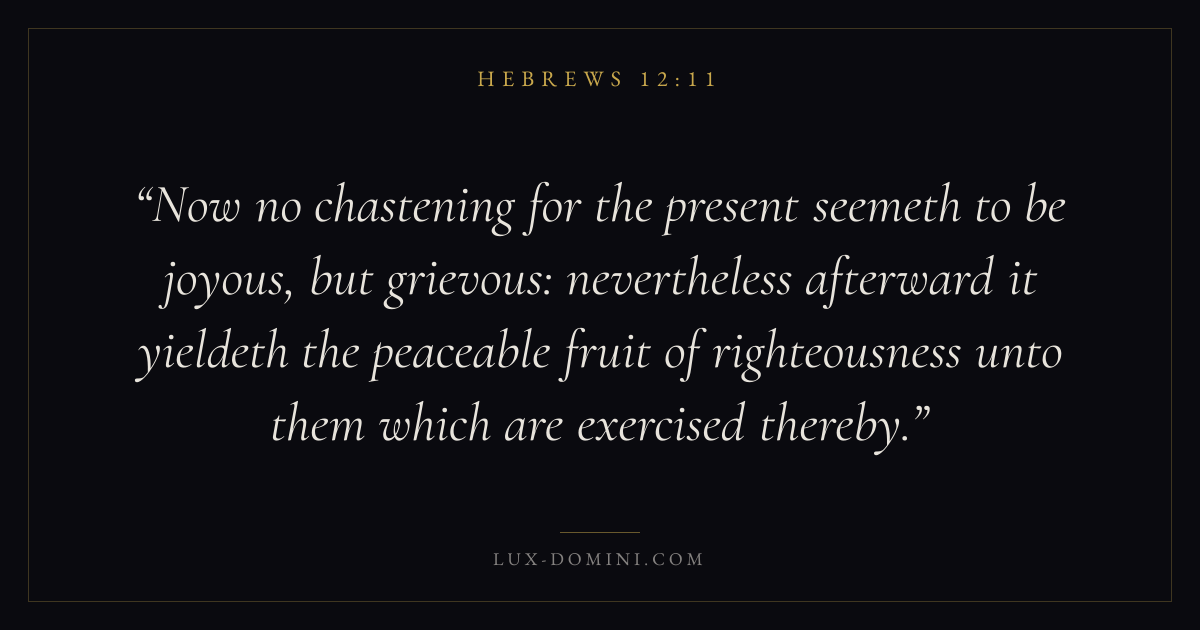
Now no chastening for the present seemeth to be joyous, but grievous: nevertheless afterward it yieldeth the peaceable fruit of righteousness unto them which are exercised thereby.
What does Hebrews 12:11 mean?
The persevering obedience of faith in Christ, was the race set before the Hebrews, wherein they must either win the crown of glory, or have everlasting misery for their portion; and it is set before us.
Key themes
Read with
Keep this verse inside Hebrews 12:9-13 and alongside a few nearby related passages.
Commentary on Hebrews 12:11
Now no chastening for the present seemeth to be joyous, but grievous - It does not impart pleasure, nor is this its design. All chastisement is intended to produce pain, and the Christian is as sensitive to pain as others. His religion does not blunt his sensibilities and make him a stoic, but it rather increases his susceptibility to suffering. The Lord Jesus, probably, felt pain, reproach, and contempt more keenly than any other human being ever did; and the Christian feels the loss of a child, or physical suffering, as keenly as anyone.
Key words
- chastening
-
Now no chastening for the present seemeth to be joyous,.
- present
-
Now no chastening for the present seemeth to be joyous,.
- seemeth
-
Now no chastening for the present seemeth to be joyous,.
Context in Hebrews 12
Show chapter context
Hebrews 12 belongs to the late movement of the book, especially the section often described as faith, endurance, and final exhortation. Hebrews presents Jesus as the final revelation of God, the great high priest, the once-for-all sacrifice, and the mediator of the better covenant. Read this chapter with the wider themes of Christology, priesthood, and sacrifice in view so the individual verses keep their proper weight.
Related topics
Explore by topic
Passages on trusting God, receiving Christ, persevering without sight, and the relation between faith and lived obedience.