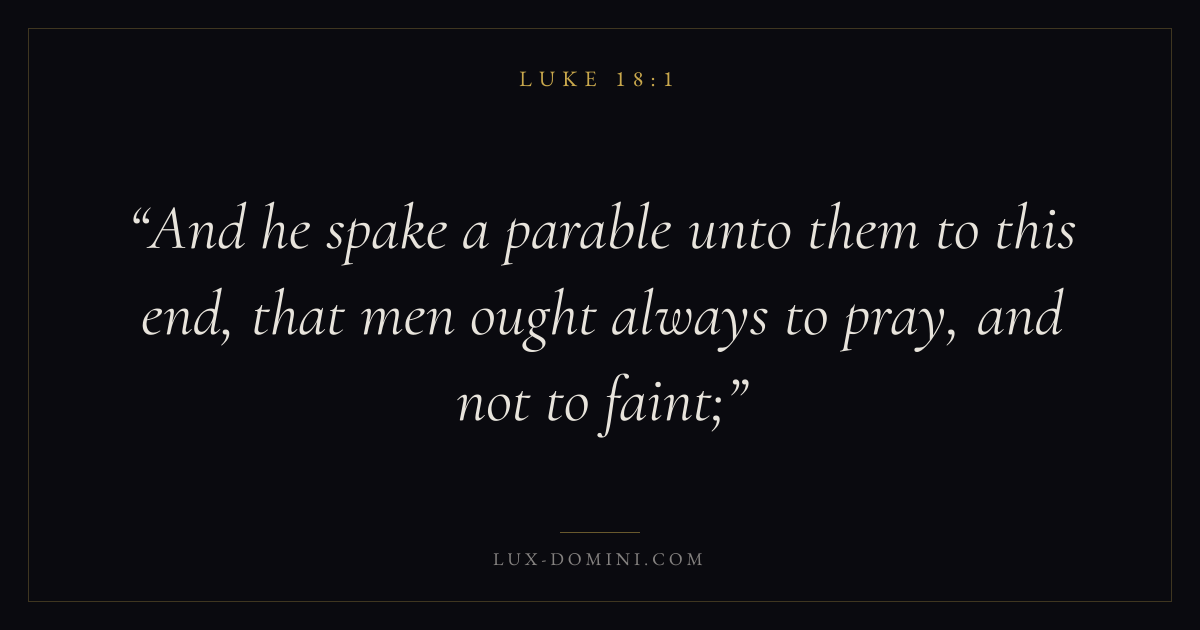
And he spake a parable unto them to this end, that men ought always to pray, and not to faint;
What does Luke 18:1 mean?
All God's people are praying people. Here earnest steadiness in prayer for spiritual mercies is taught.
Key themes
Read with
Keep this verse inside Luke 18:1-5 and alongside a few nearby related passages.
Commentary on Luke 18:1
And he spake a parable unto them to this end , that men ought always to pray, and not to faint; A parable - See the notes at Matthew 13:3 . To this end - To show this. Always - At all times. That is, we must not neglect regular stated seasons of prayer; we must seize on occasions of remarkable providences as afflictions or signal blessings to seek God in prayer; we must "always" maintain a spirit of prayer, or be in a proper frame to lift up our hearts to God for his blessing, and we must not grow weary though our prayer seems not to be answered.
Key words
- spake
-
And he spake a parable unto them to this end , that men ought always to pray, and not to faint; And he spoke a parable unto them,.
- parable
-
And he spake a parable unto them to this end , that men ought always to pray, and not to faint; And he spoke a parable unto them,.
- ought
-
And he spake a parable unto them to this end , that men ought always to pray, and not to faint; And he spoke a parable unto them,.
Context in Luke 18
Show chapter context
Luke 18 belongs to the middle movement of the book, especially the section often described as journey to Jerusalem. Luke emphasizes salvation for the poor and the outsider, prayer, joy, women, table fellowship, the Holy Spirit, and the universal reach of Christ’s mission. Read this chapter with the wider themes of salvation, Spirit, and prayer in view so the individual verses keep their proper weight.
Related topics
Explore by topic
Passages on asking, persistence, confession, dependence, and the way prayer shapes Christian life and attention.
Bible verses about justice and mercy
Key texts on public righteousness, neighbor-love, social ethics, compassion, and the prophetic refusal to separate worship from justice.
Central texts on sin, grace, faith, Christ’s saving work, and the Bible’s announcement that salvation is received rather than achieved.