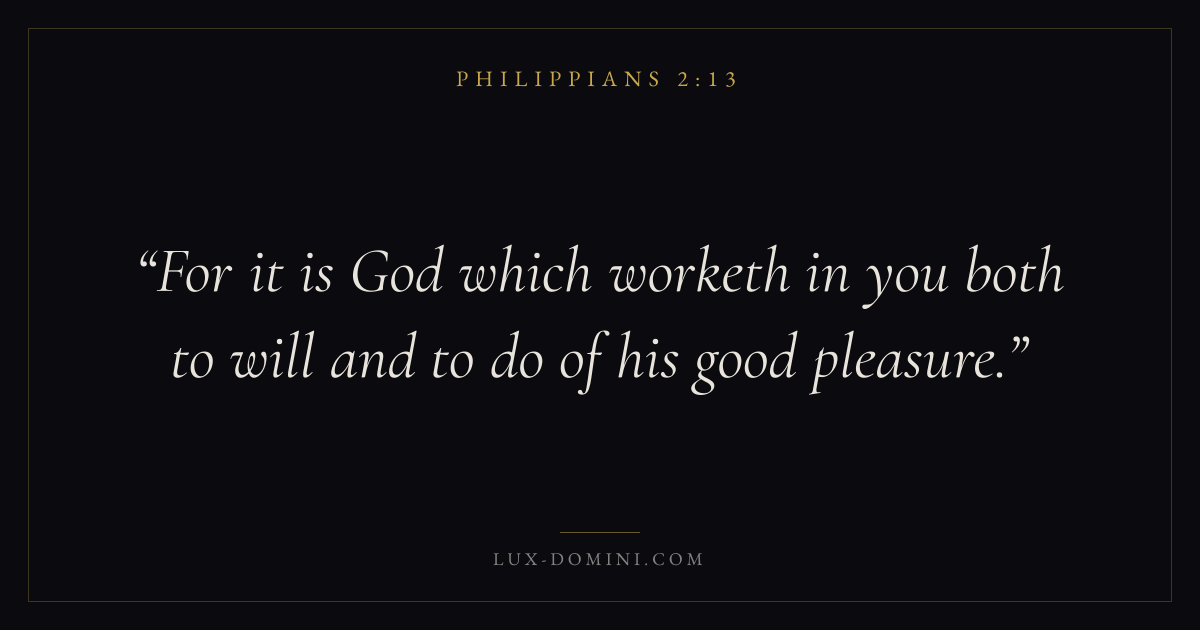
For it is God which worketh in you both to will and to do of his good pleasure.
What does Philippians 2:13 mean?
We must be diligent in the use of all the means which lead to our salvation, persevering therein to the end. With great care, lest, with all our advantages, we should come short.
Key themes
Read with
Keep this verse inside Philippians 2:12-13 and alongside a few nearby related passages.
Commentary on Philippians 2:13
For it is God that worketh in you - This is given as a reason for making an effort to be saved, or for working out our salvation. It is often thought to be the very reverse, and people often feel that if God works "in us to will and to do," there can be no need of our making an effort, and that there would be no use in it. If God does all the work, say they, why should we not patiently sit still, and wait until He puts forth His power and accomplishes in us what He wills?
Key words
- good pleasure
-
good pleasure.
- worketh
-
For it is God which worketh in you,.
Context in Philippians 2
Show chapter context
Philippians 2 belongs to the early movement of the book, especially the section often described as Christ hymn and call to humility. Philippians is a joyful prison letter centered on Christ’s humility, resurrection-minded hope, and steadfast partnership in the gospel. Read this chapter with the wider themes of joy, humility, and partnership in view so the individual verses keep their proper weight.
Related topics
Explore by topic
What Scripture teaches about obeying God, the relationship between faith and obedience, and the blessings that follow faithfulness.
A collection of passages on hope under pressure, future inheritance, resurrection expectation, and confidence in God’s final faithfulness.
Bible verses about suffering and trials
Key passages on grief, endurance, lament, divine mystery, and the Christian claim that suffering is neither final nor meaningless.
Central texts on sin, grace, faith, Christ’s saving work, and the Bible’s announcement that salvation is received rather than achieved.
Passages on lowliness, modesty, the contrast between pride and humility, and the way God exalts those who humble themselves.