Let your moderation be known unto all men. The Lord is at hand.
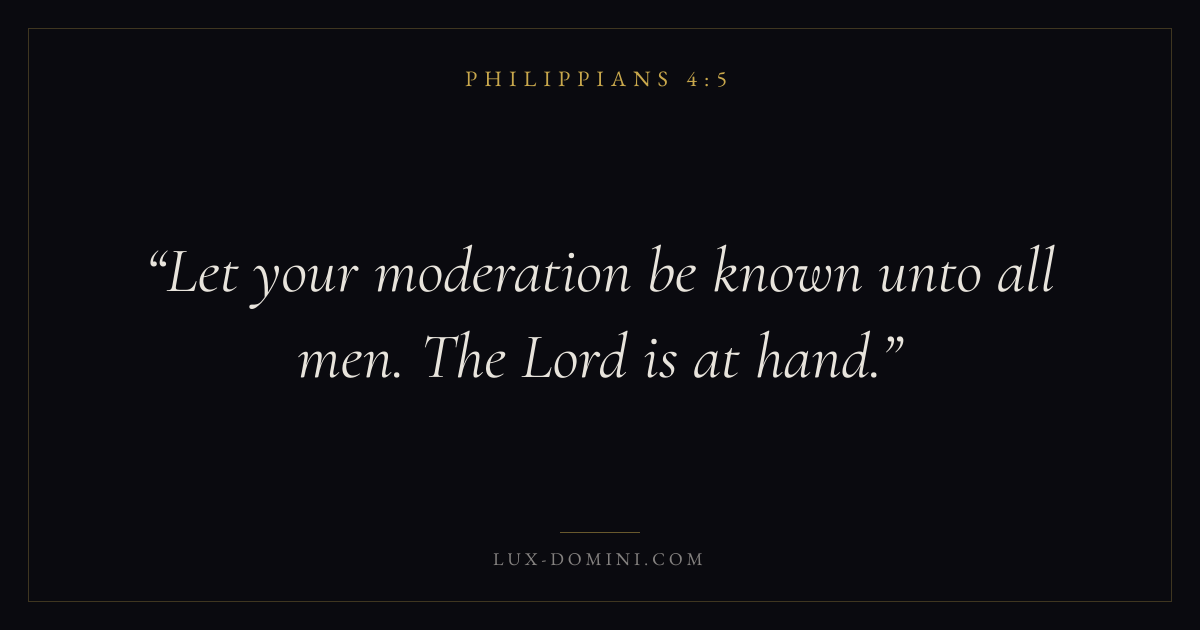
What does Philippians 4:5 mean?
Let believers be of one mind, and ready to help each other. As the apostle had found the benefit of their assistance, he knew how comfortable it would be to his fellow-labourers to have the help of others.
Key themes
Read with
Keep this verse inside Philippians 4:4-5 and alongside a few nearby related passages.
Commentary on Philippians 4:5
Let your moderation be known unto all men - That is, let it be such that others may see it. This does not mean that they were to make an ostentatious display of it, but that it should be such a characteristic of their lives that it would be constantly visible to others. The word "moderation" - επιεικες epieikes - refers to restraint on the passions, general soberness of living, being free from all excesses. The word properly means that which is fit or suitable, and then propriety, gentleness, mildness - They were to indulge in no excess of passion, or dress, or eating, or drinking.
Key words
- your authority
-
your authority. The argument or reason enforcing moderation in the above sense of it follows, the Lord is at hand.
- your authority
-
your authority. The argument or reason enforcing moderation in the above sense of it follows, the Lord is at hand.
Context in Philippians 4
Show chapter context
Philippians 4 belongs to the closing movement of the book, especially the section often described as final exhortations and gratitude. Philippians is a joyful prison letter centered on Christ’s humility, resurrection-minded hope, and steadfast partnership in the gospel. Read this chapter with the wider themes of joy, humility, and partnership in view so the individual verses keep their proper weight.
Related topics
Explore by topic
A collection of passages on hope under pressure, future inheritance, resurrection expectation, and confidence in God’s final faithfulness.
Bible verses about suffering and trials
Key passages on grief, endurance, lament, divine mystery, and the Christian claim that suffering is neither final nor meaningless.
Passages on lowliness, modesty, the contrast between pride and humility, and the way God exalts those who humble themselves.