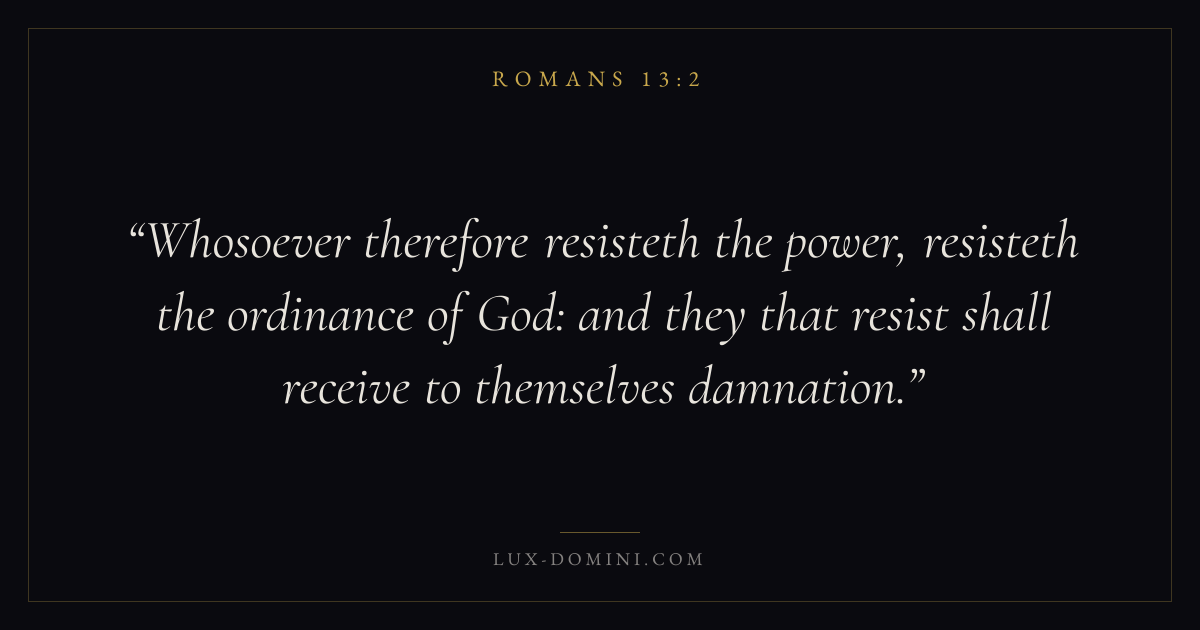
Whosoever therefore resisteth the power, resisteth the ordinance of God: and they that resist shall receive to themselves damnation.
What does Romans 13:2 mean?
The grace of the gospel teaches us submission and quiet, where pride and the carnal mind only see causes for murmuring and discontent.
Key themes
Read with
Keep this verse inside Romans 13:2-6 and alongside a few nearby related passages.
Commentary on Romans 13:2
Whosoever therefore resisteth ... - That is, they who rise up against "government itself;" who seek anarchy and confusion; and who oppose the regular execution of the laws. It is implied, however, that those laws shall not be such as to violate the rights of conscience, or oppose the laws of God. Resisteth the ordinance of God - What God has ordained, or appointed. This means clearly that we are to regard "government" as instituted by God, and as agreeable to his will.
Key words
- Whosoever
-
Whosoever therefore resisteth the power,.
- therefore
-
Whosoever therefore resisteth the power,.
- resisteth
-
Whosoever therefore resisteth the power,.
Context in Romans 13
Show chapter context
Romans 13 belongs to the middle movement of the book, especially the section often described as Israel, mercy, and transformed life. Romans is Paul’s fullest sustained exposition of sin, grace, righteousness, faith, Israel, the Spirit, and transformed life in Christ. Read this chapter with the wider themes of justification, grace, and faith in view so the individual verses keep their proper weight.
Related topics
Explore by topic
Passages on trusting God, receiving Christ, persevering without sight, and the relation between faith and lived obedience.
Key passages on God's unmerited favour, the grace of Christ, salvation by grace through faith, and how grace transforms the way believers live.
Passages on lowliness, modesty, the contrast between pride and humility, and the way God exalts those who humble themselves.