And when he had spent all, there arose a mighty famine in that land; and he began to be in want.
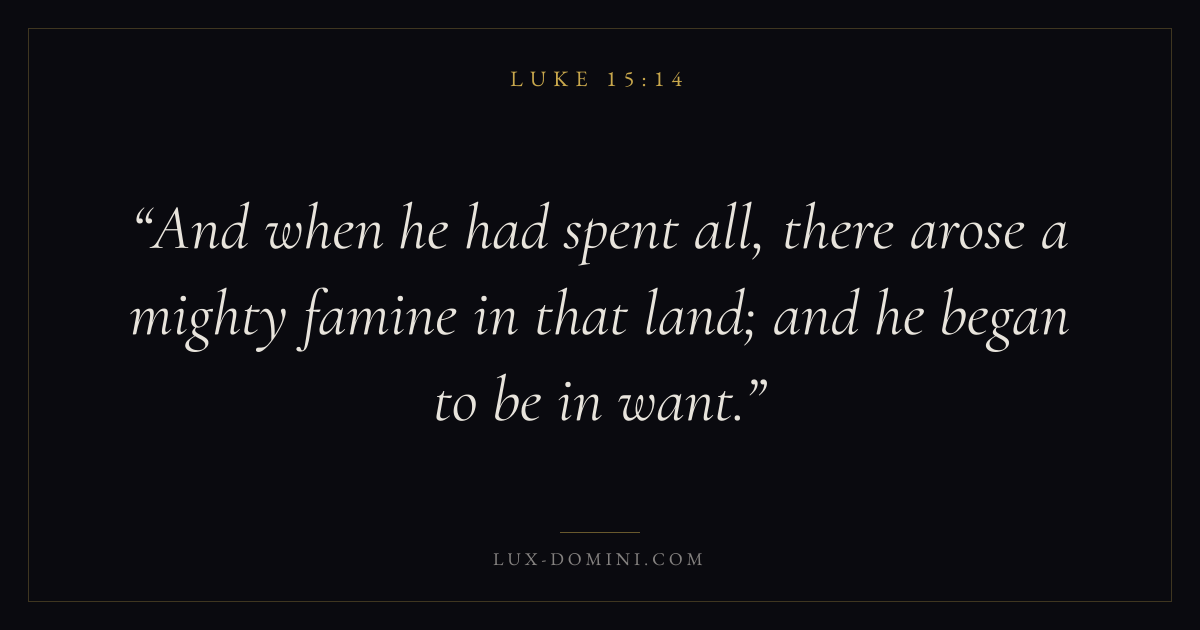
What does Luke 15:14 mean?
The parable of the prodigal son shows the nature of repentance, and the Lord's readiness to welcome and bless all who return to him.
Key themes
Read with
Keep this verse inside Luke 15:11-15 and alongside a few nearby related passages.
Commentary on Luke 15:14
A mighty famine - Famines were common in Eastern nations. They were caused by the failure of the crops - by a want of timely rains, a genial sun, or sometimes by the prevalence of the plague or of the pestilence, which swept off numbers of the inhabitants.
Key words
- spent
-
And when he had spent all,.
Context in Luke 15
Show chapter context
Luke 15 belongs to the middle movement of the book, especially the section often described as journey to Jerusalem. Luke emphasizes salvation for the poor and the outsider, prayer, joy, women, table fellowship, the Holy Spirit, and the universal reach of Christ’s mission. Read this chapter with the wider themes of salvation, Spirit, and prayer in view so the individual verses keep their proper weight.
Related topics
Explore by topic
Passages on asking, persistence, confession, dependence, and the way prayer shapes Christian life and attention.
Bible verses about justice and mercy
Key texts on public righteousness, neighbor-love, social ethics, compassion, and the prophetic refusal to separate worship from justice.
Central texts on sin, grace, faith, Christ’s saving work, and the Bible’s announcement that salvation is received rather than achieved.
Key passages on God's unmerited favour, the grace of Christ, salvation by grace through faith, and how grace transforms the way believers live.