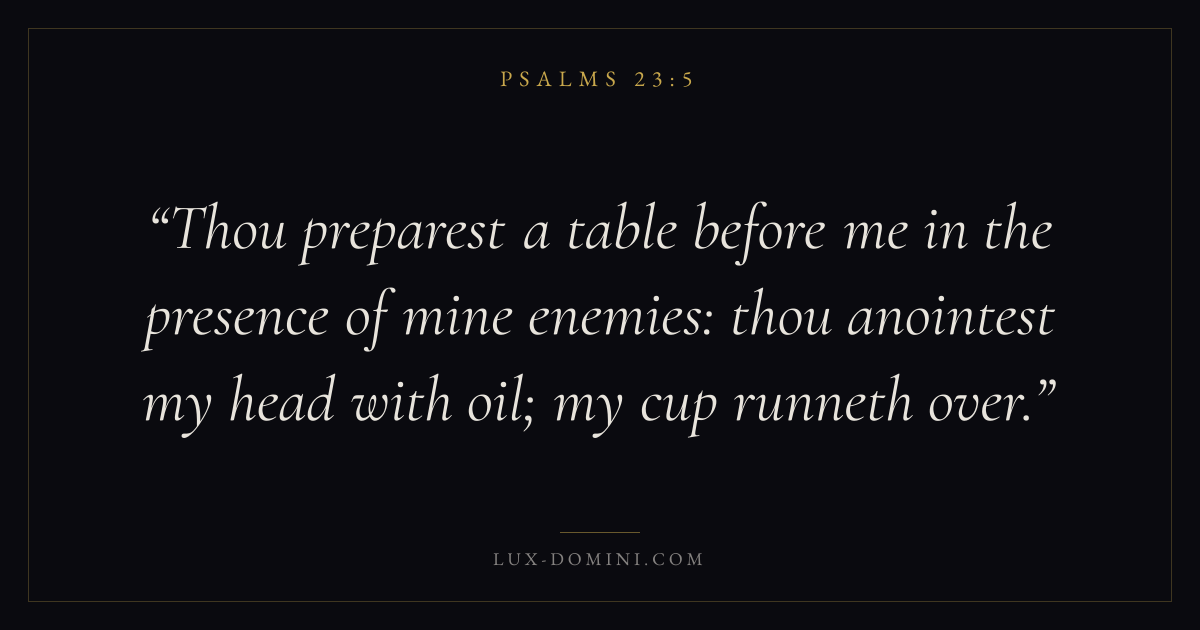
Thou preparest a table before me in the presence of mine enemies: thou anointest my head with oil; my cup runneth over.
What does Psalms 23:5 mean?
God's care is so full that it becomes a feast in the presence of enemies. The verse speaks of honor, welcome, and abundance given by the Lord even when trouble has not fully gone away.
Key themes
Read with
Keep this verse inside its immediate passage and alongside a few nearby related passages.
Commentary on Psalms 23:5
Thou preparest a table - The image is now changed, though expressing the general idea which is indicated in the first verse of the psalm, "I shall not want." The evidence or proof of this in the previous verses is, that God was a shepherd, and would provide for him as a shepherd does for his flock; the evidence here is that God had provided a table, or a feast, for him in the very presence of his enemies, and had filled his cup with joy. The word "table" here is synonymous with "feast;" and the meaning is, "thou providest for my wants.
Key words
- preparest
-
Thou preparest a table before me,.
- table
-
Thou preparest a table before me,.
- before
-
Thou preparest a table before me,.
Context in Psalms 23
Show chapter context
Psalms 23 belongs to the early movement of the book, especially the section often described as Book I. Psalms is the Bible’s great book of sung prayer, teaching the full range of faithful speech from anguish and repentance to jubilation and doxology. Read this chapter with the wider themes of prayer, praise, and lament in view so the individual verses keep their proper weight.
Related topics
Explore by topic
Passages on trusting God, receiving Christ, persevering without sight, and the relation between faith and lived obedience.
Passages on asking, persistence, confession, dependence, and the way prayer shapes Christian life and attention.
Bible verses about thankfulness and gratitude
Passages on thanksgiving to God, grateful worship, and the discipline of remembering God’s goodness in ordinary life.
Bible verses about grief and loss
Passages for sorrow, bereavement, lament, and the difficult work of hoping in God without denying what has been lost.